

Dr. Arindam Basu
Northern India Textile Research Association, Ghaziabad
Abstract
The world has started understanding that if we consume the natural resources at present level soon there will be shortage of them and the world will be in path of no return. Considering the same the awareness of sustainability has forced every industry to think about the processes followed today and take corrective steps. The textile industry is one of the most polluting industries in the world and it has started following the path of circular economy. Circular economy follows 3Rs i.e. reduce, reuse and recycle. This article discusses about the challenges faced by the industry while recycling and new developments taking place throughout the world to face them.
Introduction
Population growth, improvement in living standards and decreasing life cycle time of textile products contributed to global fibre consumption that generates a significant amount of pre-consumer (post-industrial) and post-consumer fibre waste.
Globalisation has made the textile and apparel industry produce more clothing at lower costs, which resulted in many consumers adaptation of fast fashion trend that considers clothing a disposable product. As rates of textile manufacturing and disposal escalate, the ramifications to health and environment through water pollution, microplastic contaminant concentrations, and greenhouse gas emissions increase.
The textile industry accounts for about 10% of total carbon emissions [1] and has been identified as the fifth largest contributor of carbon emissions [2, 3]. In this regard, it is essential to consider the efficient use and management of natural sources by reducing the raw material consumption through reuse and recycling of textile products considered as waste. Discarding over 15.4 million tons of textiles each year the US recycles less than 15% sending the remainder to landfills and incinerators [4]. Globally, approximately 75% of textile waste is disposed off in landfills, 25% is reused or recycled and less than 1% is recycled back into clothing [5.6]. A representative figure of the textile waste generated and recycled in USA over the years is shown below.
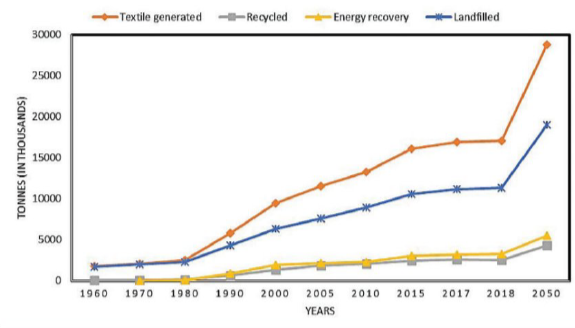
Fig.1 Data on textiles generated and waste generated in the USA [7]
Waste or product is not an inherent property of materials but a categorisation reflecting their economic values. A circular economy is a production-consumption pattern where waste streams become secondary raw materials [8]. According to Sillanpac and Ncibi [9] the textile industry is responsible for 5% of the total waste worldwide. In 2015, 16 Mt of textile waste was generated in USA. About 15.28% was recycled and 19.13% incinerated, but most was land filled. A Life Cycle Analysis (LCA) of textiles in France concluded that GHG footprint was reached 442 kg CO2 eq/y/capita. The circular economy pattern is based on four main pillars. They are tackling the growth of material stocks, defining clear criteria for ecological recycling and eliminating unsustainable biomass production, integrating the decarbonisation of the energy system with the circular economy and lastly prioritising absolute reductions of non-circular flows over maximising (re) cycling rates.
Today recycling has become a necessity not because of the shortage of any item but to control pollution. There are three ways to reduce pollution. One is to use newer technologies that pollute less. The other is to effectively treat the effluent conforms to expected norms. The third and most practical way is to recycle the waste several times before disposal. In the case of recycling as the material goes through number of processes recycling become more difficult. For example, soft waste generated in the mills can be recycled easily by mixing around 5% with the virgin mixing. Comber noil and other short fibres can be used in rotor spinning but when it becomes hard waste it cannot be recycled easily. The weaving process, dyeing of fabrics and finishing processes make the waste recycling process more complicated.
Challenges For Recycling of Textile Materials
The recycling of textile materials commercially faces various challenges. The problems faced can be broadly classified into five major problems. Those are (1) lacking of commercially viable recycling technologies for a low-grade textile fraction; (2) lack of main-streamed up-scaled processes and know how to separate fibre types from the mixed blend and composite structures; (3) costly recovery process; (4) the fact that the recycling end-market is dominated by low quality materials: (5) and costly logistics and the low availability of textiles recycling plants on both local and regional levels. Decolouration technology is a critical problem as the waste fabrics contain different colours and depending on the fibre components the dyes are of different nature. If the colour is not removed the colour of the end product made from waste cannot be controlled.
In case of post-consumer textiles identifying the materials is the most challenging because of variable fibres mix in many of them. There are some promising methods that can be used to analyse the complex components of different textiles. Application of near- infrared (NIR) spectroscopy and chemometrics was reported more than two decades ago. The cotton component in cotton/polyester was determined by genetic algorithms [10]. In addition, nuclear magnetic resonance (NMR) has been used to predict the proportion of cellulose and polyester in textile blends [11]. Nevertheless, solid state NMR can show lower sample throughput and efficiency. Still, it allows more precise measurements that are not influenced by factors such as particle size, dyes or surface structure [12]. On the other hand, the nature of the sample surface, such as particle size, brightness, and colour, moisture content and coating chemicals have a significant impact on NIR signals that are produced.
Industrial waste or pre-consumer waste can be sourced reasonably easier as compared to post-consumer waste. Country like India, China where population is very high it is very difficult to collect post-consumer waste. In Canada, an estimated 500,000 tons of apparel waste is disposed off annually. The average Canadian discards between 30 to 55 pounds of textiles annually almost 95% of those clothes can be reused or recycled [13]. In Ontario, approximately 1.2 million people dispose their unwanted clothes into the waste bin at a rate of roughly 45000 tons annually.
Recycling Of Textiles
Textile materials can be recycled through mechanical, thermal, thermos-mechanical and chemical methods. Textile recycling mainly entails the reprocessing of post or pre-consumer waste fabric which, are to be reused in new textile or non -textile products. The recycling routes are the dissolution of natural fibres, the chemical degradation of polymeric fibres, mechanical treatment (pre-treatment) and thermal treatment. The strategies that can be used to recycle textile fibres such as mechanical recycling, chemical recycling (pyrolysis, enzymatic hydrolysis, hydrothermal, ammonolysis, gasification, glycolysis) and decolourization technology.
The textile recycling rout can be classified based on the nature of the processes involved or the level of disassembly of the recovered materials. Fabric recycling consists of recovering and reusing of a fabric into new products. Fibre recycling involves disassembling of fabric but preserving the original fibres. Polymers or oligomers recycling consist of disassembling of fibres while preserving the polymers or oligomers. Monomer recycling consists of disassembling of polymers or oligomers, while preserving the monomers. Moreover, textile recycling can be classified into upcycling, downcycling, closed-loop and open-loop recycling. If the product made from recycled material is of higher quality or value than the original product, it is termed as upcycling; the opposite of this is known as downcycling. Closed-loop recycling involves recycling of a material from a product and reusing it in another more or less identical product. In fact, this recycling approach recovers the raw material used to produce a polymer product and then reprocess it into the same product or equivalent quality as that from the virgin material [14].
In contrast, open-loop recycling approach consists of recycling of recycling of a material from a product and reusing it in another product. There are few mechanical recycling options for post-consumer textile waste fabrics due to the variety and amount of fibre components in one textile waste garment. Mixed textiles cannot be recycled mechanically effectively. The shredding technique is being used which reduces the length of fibres. Generally, the resulting cotton fibres are of lower quality and reduced strength than virgin cotton fibres. They can be frequently combined with virgin fibres to improve the quality. The metallic elements are removed, and post consumers textiles are converted into wipers. Textiles from pre- and post-consumer markets can also be as a raw material for filler products, including flocking, insulation and non-wovens as well as shoddy yarns. A defector is developed with mechanical ripping and carding process during the production process. The first step of the defector process requires the feedstock to be shredded by the rotation crusher and sorted based on the type of fibre. Then the fibre is crushed through correct fraction sizes and processes with card oil. Furthermore, the defibering process is a three-phase mechanical ripping carding process. Then the materials are needled and folded to create a fibre blanket. In the needling process, other materials can be added to the product. Then the fibre blanket is trimmed to the correct size and is packed.
Recycling wool through open loop recycling can be used to mechanically extract the garments back into a fibrous form and these materials can be used as raw material. Nonwoven fabrics are generally made from these materials by garneting, carding or air-laying webs, which are then mechanically, thermally or chemically bonded. The application of open loop recycling includes insulators for mattresses and composites for acoustic absorption. A closed loop recycling can be conducted with woollen materials. Using traditional techniques, recycled wool yarns can be turned into very high value apparel products. Woollen materials are formed from long fibres that have been carefully treated, allowing for mechanical recycling to convert the wool into fibres. The recycled wool waste should ideally be compatible with the same carding, spinning and fabric production processes used to process raw wool during the production of woollen yarn. The post-consumer wool recycle depends on effective strategies to reduce fibre breakage and to maximize residual fibre length following the mechanical pulling method. Nylon waste such as fishing nets (Nylon 6) and carpets is the common raw material for that used in mechanical recycling. Nylon materials are recycled via reshaping and melting to locate new fibres with appropriate strength and length [15].
Chemical recycling process involves addition of chemicals to degrade the complex textile polymer to create smaller polymer molecules. The chemical recycling to monomer, ‘CRM’, is a popular method that can be used to degrade polymers such as those in textile waste to monomers. Furthermore, a solution purified polymer, an oligomer, a monomer or a crude feedstock in gaseous or liquid form are all examples of textile recycling methods. Typical chemical processes are glycol sis, hydrolysis and alcoholises. In addition, thermo-chemical methods consist of hydro cracking, paralysis and gasification, which are typically conducted in the presence of catalysts at high temperature. Nylon 6 is a polyamide made from seven-member ring caprolactum, making it a valuable candidate for CRM. Since the 1960s, researchers have been studying the depolymerisation of Nylon 6 back to monomer, and CRM has been used for Nylon6 for decades.
Chemical processes have been developed to separate the fibre components from waste blended fabrics. Polyester and cotton fibre blend is widely used in apparel and thus many studies have been focussed on separating these fibres using chemical means. One such study reported the technology to separate polyester and cotton from waste jeans [16]. In the first stage dyes are removed from the jeans. The second stage consists of polyester dissolution and separation from cotton. It is claimed that the recycling rate achieved by this technology is more than 96%. The technology’s economic return is US$ 1629 per tonne of waste with carbon footprint reduction by 1440 kg CO2-eq. Another such study reported a technology to separate cotton from cotton/polyester blended textile waste [17]. The cotton separation occurs in three stages: dye removal from the textiles, dissolution of polyester using dimethyl sulfoxide treatment in a specially designed reactor, and purification of the obtained cotton fibres. It is claimed to have 93% recycling rate and profitability of US$ 1466 per tonne of waste and carbon footprint reduction by 1534 kg CO2 equivalent.
Garment recycling in particular to the reusing of discarded or donated garments. The global trade in second hand clothing is worth more than US$ 1.0 billion each year. Around 80% of people in Africa wear imported second hand clothing. Fabric recycling is mainly based around consumer markets in developed countries, yet waste issues are more prevalent in developing countries. With the issue of second hand clothing market, Africa has become a dumpsite for most European and Asian countries where most of the production occurs, disconnecting the reverse supply chain from the forward supply chain. Charitable organisations such as Ellen MacArthur Foundation, Waste & Resources Action Program (WRAP), FABSCRAP and GOONJ for example collect end of life textiles through their own infrastructure and through different purposes such as donation, reuse and recycling or sometimes to sell to earn money for charity work. Though in India there is no pan India group except GOONJ, there are local groups in most of the cities who collect end of life (for first users) garments and distribute them to the needy people or during natural disasters. In all big cities there are fabric racks hanged outside schools and building societies, which is often termed as wall for kindness, where first users keep their garments after usage and the needy people collect them for their wearing purpose. It is essential to implement and operate effective take back systems and redirect waste to appropriate sorting and recycling centres.
Ethanol, Biogas, thermal and acoustic insulation materials, activated carbon production and carbon black, dye absorbing materials, paper making, clean solid fuel, cellulosic bids for drug delivery, Nano/micro structures are the other uses of textile waste materials. Many researchers have reported nano/micro structures such as nano cellulose, cellulose nano-crystals (CNCs) and nano fibrous membranes developed from waste textiles for composite applications. A new insulation material was made from waste wool and recycled polyester fibre (RPET) for building industry applications [18]. RPET/waste wool mats showed very good thermal insulation, acoustic absorption, moisture absorption and good fibre property.
New Developments Towards Recycling
Polyester, which is usually derived from petroleum, is the world’s most consumed textile fibre; yet recycled polyester only contributes to 15% of total production, almost all of which is made with plastic bottles. A major barrier to recycling polyester fabric is the presence of dyes, which makes fibre to fibre recycling almost impossible. Researchers at Leeds Institute of Textile and Colour in collaboration with Wlfson CO2 lLab in the school of chemistry, are developing a solution that uses new technology to deploy CO2 and separate dye from fibre enabling easier recycling the polyester [19]. CuRe Technology (Emmen, The Netherland), Garbo Srl (Cerano, Italy), go3n (Chiasso, Switzerland) and PerPETual (Remscheid, Germany) are companies involved in developing new processes for chemically recycling PET polyester for fabric and garment production. With the aim of validating and scaling up these four promising technologies, Amsterdam based ‘Fashion for Good’ has launched “Full Circle Textile Project – Polyester” to encourage their financing and secure off take commitments from the fashion industry [20]. The project partners include catalytic funder Laudes Foundation, brand partners adidas, Bestseller, C&A, PVH Corp, Target and Zalando and affiliate partners Arvind, WL Gore and Teijin frontier.
Though in most of the cases polyester fibre is produced by recycling PET bottles that cannot be considered as closed loop recycling. When polyester fibre/yarn/fabric is recycled into polyester fibre that will be real closed loop recycling. The figure below shows a method to recycle polyester from polyester textile material.
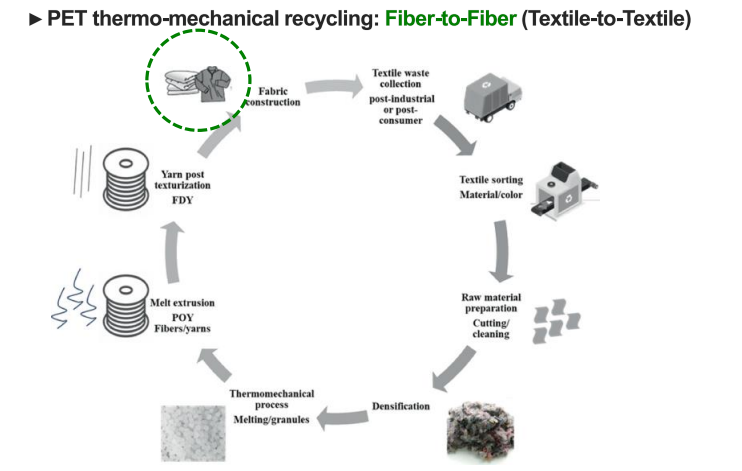
Fig.2 Schematic diagram of PET thermos-mechanical recycling (Textile to textile)
Carbios and Indorama Ventures are partnering to build an enzymatic PET bio-recycling production plant in Longla ville, Meurthe-et-Moselle, France with the processing capacity of around 50000 tons of post-consumer PET waste per year that is equivalent to 2 billion PET bottles or 2.5 billion PET trays [21].
Recycling of nylon is more difficult than recycling of polyester as it does not break down easily. According to the records of the World Society for the Protection of Animals, more than 600,000 tons of nylon fishing gear including nets, is dumped into ocean every year. Hyosung, a Korean-based company, developed a method for recycling discarded nylon items into a textile grade fibre called Regen. Although the recycling method is not completely environmentally sustainable, recycling nylon keeps a large percentage of petrochemical waste from going into the landfill or being incinerated and releasing toxic emissions into the atmosphere.
For cotton and wool, recycled fibres and yarns made from post-consumer (PCT) sources are available in the market. Through the FIBERSORT project, Circle Economy has found that upward of 15% all collected PCT is recyclable grade, mono material, with more than 80% cotton which is suitable for mechanical recycling into new textiles. With global collected volumes of more than 12 million tonnes per year, this suggests that there is plenty of feedstock available. One T-shirt made with recovered cotton yarns containing 52% recycled cotton, saves up to 2700 litres of water. In the Higg Materials Sustainability Index, recycled cotton fibre scores 1.0, as compared to 11.9 for organic cotton and 60.5 for conventional cotton [22].
To date, the most successful use of recycled carbon fibres in a commercial product is reclaimed carbon fibre material in BMWs i3 and 7 series models car [23]. The company used the reclaimed carbon fibre from manufacturing waste, in which dry fibre processes were converted into new product forms and used in closed loop recycling system. This recycling process helps industry in this aspect by reducing the cost of carbon fibre manufacturing. The joint venture of RECAFIL with SGL Automotive Carbon Fibres developed an innovative recycling process which makes it possible to recirculate valuable carbon fibres into the production process and thus closes the material cycle [24]. Carbon Fibre Remanufacturing (CFR) develops new products for industrial, commercial and retail product applications using reclaimed carbon fibre. It is claimed that remanufactured carbon fibres retain 100% of their virgin properties [25].
Conclusions
It is well understood by all that only way to save the world from destruction is following circular economy. The main three steps followed are reduce, reuse and recycle. In textile industry recycling will be able to save carbon footprint, energy consumption, water consumption and most important the saving of raw material which is fast depleting. Saving of such scarce things may make better environment for the future generations to live better life. An all-out effort is in progress to find ways to recycle the industrial, pre-consumer and post-consumer textile waste and some have been developed. Being a continuous process more efforts have to be made to develop more recycling techniques with minimum amount of energy and water consumption. Already overseas customers are insisting to use certain part of recycled material in the clothing. Awareness in this aspect is still lacking in India which need to be improved.
References
- TTRI Taiwan Textile Research Institute. Low carbon intelligent operations for textile industry in APEC economics, 2013. https:// www.apec.org/docs/defaut-source/Publications/2023/8/ Low-Carbon-Intelligent-Operations-for-Textile-Industry-in-Apec-Economics—Project/TOC/Main-Reprt-pdf
- Athalye, A. Carbon footprint in textile processing, Colourage, 2012, 59, 45-47.
- Rana, S. Pichandi, S. Karunamoorthy, S. Et al, Carbon footprint in textile and clothing products, Handbook of Sustainable Apparel Production, Subramanian, S.M., Ed; CRC Press; Boca Ratol, Fl, USA, 2015, pp 141-165.
- Henrique, P., Alves T. F., Bahr G et al, Combining flexible and sustainable design principles for evaluating designs: Textile recycling applications, J. Manuf. Sci. Eng. , 2024, 146(2), 0209023 (12 pages). http://doi.org/10.1115/1.4063993
- Ellen MacArthur Foundation. A New Textile Economy: Redesigning Fashion’s Future, 2017. https://www.ellenmacarthurfoundation.org/publications
- Textile Exchange. Preferred Fibre and Materials Report, 2020. https://textileexchange.org/wp.content/uploads/2020/06/Textile-Exchange-Preferred-Fiber-Materials-Market-Report-2020.pdf
- European Protection Agency. Facts and figures about materials, waste and recycling. https://www.epa.gov/facts-and-figures-about-materials-waste-and-recycling/textiles-material-specific-data (2021) accessed on 20th Feb 2022.
- Ragossnig, A.M., Schneider, D.R. Circular Economy, Recycling and End of waste, Waste Management Res., 2019, 37, 109-111.
- Sillanpaa, M. Ncibi, C, The Circular Economy Case Studies about the Transition from the Linear Economy: Elsevier; London, U.K., 2019. ISBN 978-0-12-815267-6.
- Rukebustch, C; Orhan, F; Durand, A; Boubellouta, T; Huvenne, J: Quantitative analysis of cotton-polyester textile blends from near-infrared spectra, Appl. Spectrose, 2006, 60, 539-544.
- Haslinger, S; Hietala, S; Hummel, M; Manma, S L; Sixta, H; Solid state NMR method for quantification of cellulose and polyester in textile blends, Carbohydr. Polym. 2019, 207, 11-16
- Park, S; Johnson, D.K.; Ishizawa, C.I., Parilla, P.A.; Davis, M.F.; Measuring the crystallinity index of cellulose by solid state 13C nuclear magnetic resonance, Cellulose, 2009. 16. 641-647.
- Juanga-Labayen, J.P.; Labayen, I.V.; Yuan, Q; A review on textile recycling practices and challenges, Textiles, 2022, 2, 174-188.
- Sandin, J.;Peters, G.M., Environmental impact of textile reuse and recycling – A review, J. Clean. Prod., 2018, 184, 353-365.
- Mondragon, G; Kortaberria, G; Mendiburu, E; Gonzalez, N; Arbelaiz, A; Peria-Rodriguez, C:, Thermo mechanical recycling of polyamide 6 from fishing net waste, J. Appl. Polym. Sci. , 2020, 137, 48442.
- Yousef, S; Tatariants, M; Tichonovas, M; Kliucininkas, L; Lukosiute, S I; and Yan, L; Sustainable green technology for recovery of cotton fibres and polyester from textile waste, J. Of Cleaner Production, 2020, 254, 120078-120111.
- El Warna, M; Gouni, A, et al, Development, characterisation and thermal performance of insulating nonwoven fabrics made of textile waste, J. of Industrial Textiles, 2009, 48,7, 1167-1183.
- Zamani, B; Towards understanding sustainable textile waste management: Environmental impact and social indicators, 2014, Chalmers University of Technology, Gothenburg, Sweden.
- https://leeds.ac.uk/main-indes/news/article/5083/revolutionary-dyeing-process-wins-circular-future-find-prize
- https://fiberjournal.com/shifting-the-needle-to-europes-pet-polyester-waste/
- https://innovationintextiles.com/fibres-yarns-fabrics/ first-of-a-kind-biorecycled-pet-plant-for-france
- https://fibre2fashion.com/industry-article/7262/developing-methods-to-make-sustainable-fibers-and-textiles
- Pickering S. J. et al, Characterisation of carbon fibres recycled from carbon fibre/epoxy resin composites using supercritical n-propanol, Composites Sci. Technol., 2009, 69(2), 192-198.
- Anon, RECAFIL recycled carbon fibres, 2016 http://www.splgroup.com/cms/intrnational/products/product-groups/cf/recafil/index.html?_locale=en.
- Van de Velde, K., Kiekens, P., Biopolymers: overview of several properties and consequences on their applications, Polym. Test., 2002, 21(4), 433-442.
